Getting to grips with reward-based dog training
One thing you hear time and time again is: “Positive reinforcement didn’t work for my dog.”
Firstly, positive reinforcement means something was added that makes a behaviour more likely to be repeated in the future. So if the behaviour didn’t increase, then positive reinforcement wasn’t actually used.
That aside, there are a lot of reasons why reward-based dog training may not seem to work. Here are just a few:
Your dog is being set up to fail
Aggression expert Michael Shikashio uses a great analogy. When you’re teaching a child to swim, you don’t throw them into the deep end and hope for the best. You make them feel safe in the shallow end with tools like armbands before adding in more complex steps.
It’s the same with dogs. If we throw them into a busy place for their first training session, they’re going to struggle and they probably won’t care about the reward you’re offering. After all, a drowning person won’t be interested in cash or chocolate raining down on them. But if we start at home, then in the garden, then in a quiet outdoor space, our dogs are in a better position to learn.
Your timing is off
Your reinforcer (reward) needs to be presented quickly after your dog has performed the behaviour you’re looking for to make them more likely to choose that behaviour in the future. If you take too long or are messing up the order, training will be less effective.
Your reward isn’t that rewarding
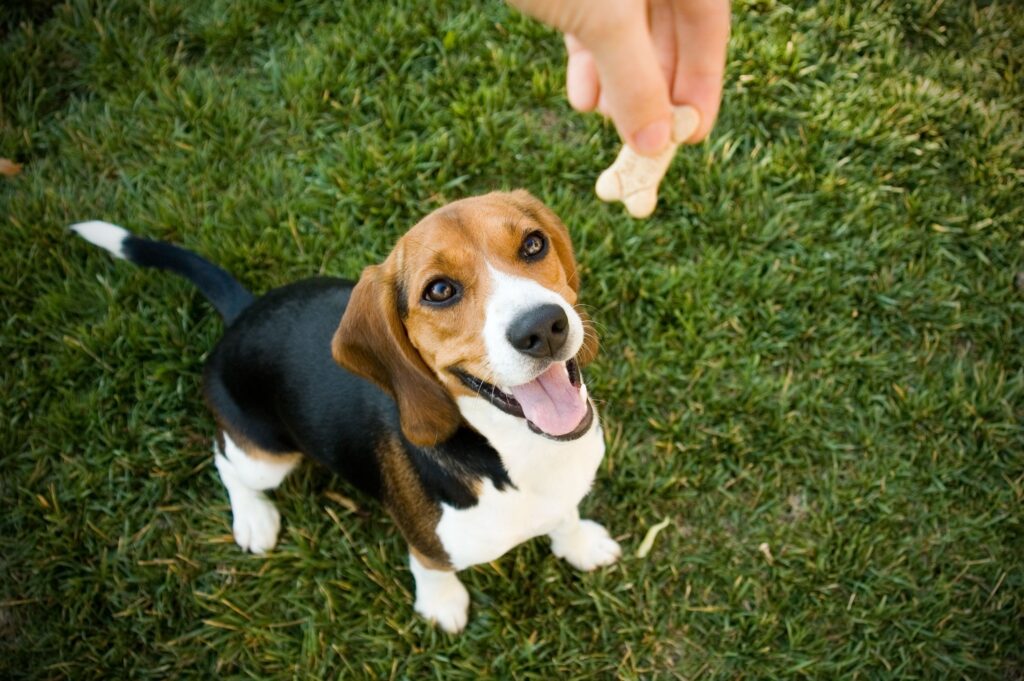
To strengthen a behaviour, a reinforcer has to be something that the dog wants at that time. So you may need to play around with rewards, including food types, play styles, delivery and even environmental rewards like sniffing.
For example, some dogs find taking even high-value treats from your hand boring but can’t get enough of searching for them. For others, playing with you may be the most rewarding thing.
Bear in mind you may need to use different rewards at different times so always have a few options in your toolbox. And reinforcing your dog in the same way all of the time can become boring so change things up.
Your dog’s emotions are too strong
If your dog is super excited or scared, they may still accept a treat that you think is a reward. But that doesn’t mean the treat was acting as a reinforcer – they were just gobbling it up because it was right in front of them.
This is another reason why all training needs to be broken into small steps. Dogs need to be able to cope and process what’s happening in order to learn and progress.
Here’s the thing about reward-based dog training…
Reward-based training can, and does, work for all dogs, whether you have a Chihuahua or a Dobermann.
You just may need a helping hand from a professional to get your set-ups and timing right. And you may need a little patience – something that we humans often struggle with. Once you start to see the benefits for both you and your dog, I can guarantee that you’ll never turn back.