Getting into dog training and behaviour
Welcome! Instead of introducing myself by writing a load of jargon about how I can help you and your dog (you can head here for that), I thought I’d give you an honest insight into my journey with my dog and how it led me here. Some of it will make you laugh; other parts will (hopefully) be so relatable that you can’t stop nodding your head as you read. Here goes my dog behaviour story…
The path to an anxious dog

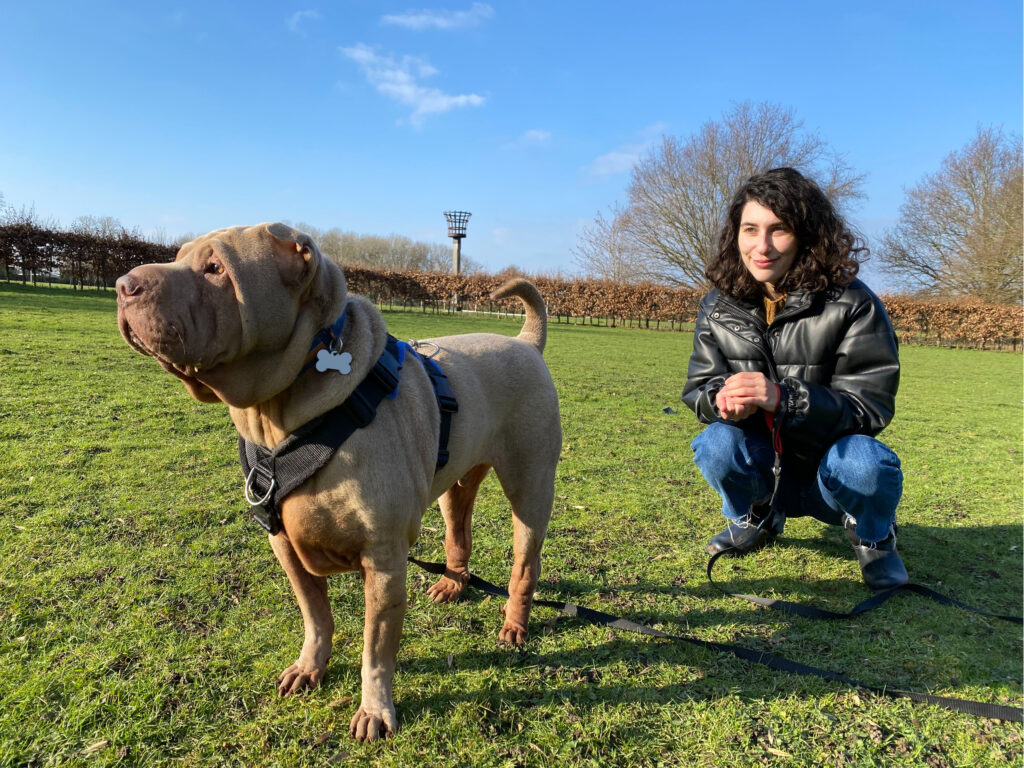
I’d always wanted a dog. When I was little, I’d make PowerPoint presentations for my mum and dad detailing all the advantages of having a canine companion. It was only later in life that I got one of my very own: a Shar Pei named Winston. Many couldn’t believe I’d chosen what’s known to be a “difficult” dog breed and yes, I wouldn’t recommend them for a lot of people. But I enjoyed his independent side and still do!
Anyway, all went swimmingly for the first few years. Winston was a bundle of wrinkles and joy that made each and every day worthwhile. And although he had his odd nervous moments (like the time his lead got caught round a table outside a fish and chip shop, nearly sending the entire thing flying when one of the family disappeared from view), he generally seemed happy. I gently socialised him with other dogs and he loved having a play but was also able to walk past other dogs without a care in the world.
Really, the only big issue I seemed to have was with the vet. It’s not unusual for dogs to enjoy going to the place where scary things happen. (It’s possible to help them at least tolerate it, though, I promise!) And after having an operation on his knee and an emergency trip after eating an entire slice of fruitcake, it’s safe to say that Winston had had his fair share of bad experiences in that place at a relatively young age.
When he was around three (I honestly can’t remember because it feels like a lifetime ago), I started to notice changes. He wasn’t so sociable with other dogs. In fact, more often than not, he was lunging, whining and growling at them on walks. He became increasingly on edge in the house, barking incessantly at the postman and any van that dared drive down the road. To top it all off, he began to cower and try to run away from the likes of bikes, prams and groups of strangers.
Walks had become a nightmare. I felt embarrassed and tense, constantly apologising for Winston’s behaviour and panicking whenever I saw other dogs or people coming our way. Home life wasn’t much better, as I’d grown frustrated at the barking and no amount of online dog behaviour advice seemed to make a difference.
Understanding dog behaviour
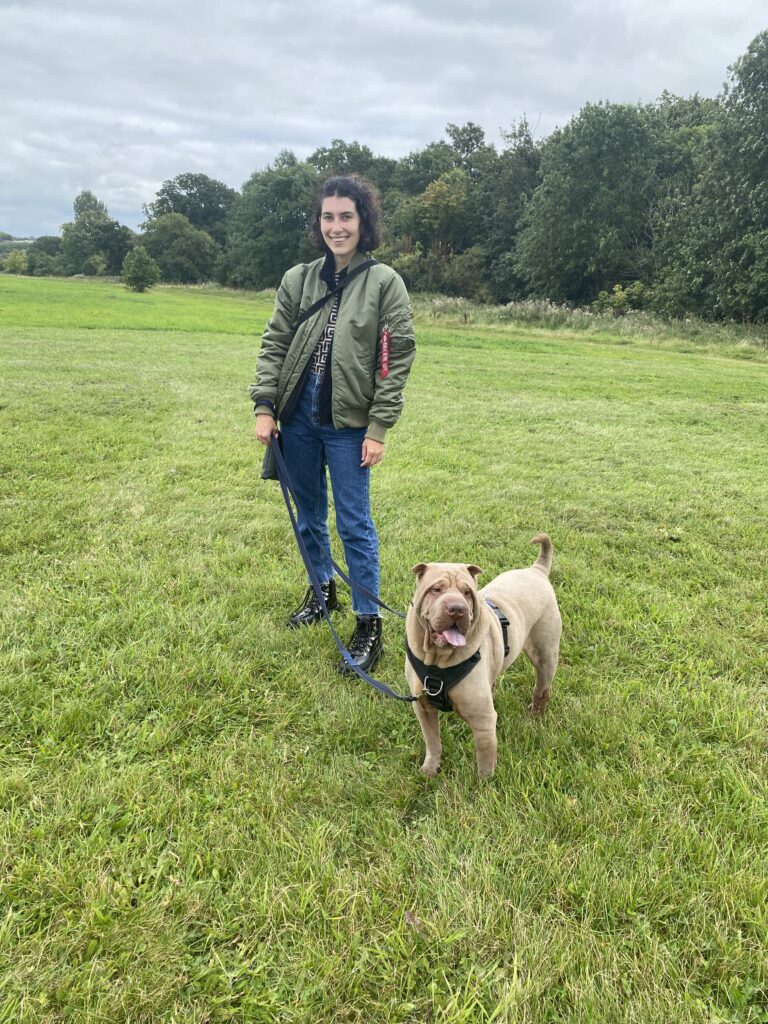
Eventually, I knew I had to take action to improve both our lives and rekindle the strong bond we once had. I looked up a dog behaviourist near me and started the first step on a journey that’s still ongoing today. I learned all about Winston’s triggers and how I needed to keep him under threshold in order to help change the way he felt. I learned how to read dog body language and advocate for him whenever he started to feel stressed. But something that stuck with me even more than the science and the practical techniques was my newfound understanding of him.
Seeing the world through his eyes, I realised that what I thought was abnormal dog behaviour was, in fact, very normal for the level of stress that he was experiencing. It didn’t matter whether I thought he was overreacting – to him, the fear was real. Altering those emotions via positive reinforcement and doing the things he enjoyed to do, rather than ticking off a standard dog checklist, helped me turn a corner.
Don’t get me wrong – it didn’t take a few weeks or even months. Winston is now six and will always be what I lovingly call a work-in-progress. I do my best to help him have the best quality of life and strive for a pressure-free, relaxed environment. I’ve accepted who he is, too – I know he’ll probably never be comfortable with crowds and may never play with a group of dogs like he did when he was younger. That’s okay, because maybe he was never too fond of them when he became a mature adult and I just didn’t have the skills to notice it.
After seeing Winston go from an overreactive dog to a dog that can now happily play sniffing games with other dogs and people around, I vowed to work on understanding dog behaviour and use that knowledge to help others. And that’s when Winnie’s World was born. After all, placing myself in Winston’s world was key to making progress.
Creating a change in your dog’s behaviour

I’m still on my educational journey (and always will be as the canine field is constantly developing). But here are three of the most important things I’ve discovered so far:
Reframe the way you think. We, as humans, have a tendency to focus on the negatives. Altering your mindset by focusing on the positives automatically makes life that bit easier. Not only will it strengthen your relationship with your dog, but it’ll also help you accept your mistakes and learn from them. (And trust me – we all make mistakes!)
Throw away the dog rulebook. Instead, focus on what your dog enjoys. If they love to sniff, let them have a sniffari walk. If they can’t get enough of destroying things, fill a cardboard box with safe-to-destroy items and let them rip it all apart. If they want a chilled day, rather than a long walk, let them.
Progress isn’t linear. Just when I thought Winston and I had cracked it, we’d have a terrible day. That didn’t mean we’d gone back to the beginning – it meant we were on the normal path of ups and downs. We have bad days and so do our dogs. So embrace each and every one.
Every dog carer has plenty of stories like this one, so I’d love to know some of yours. Let me know in the comments and tell me the one thing you’d love to learn about your dog. And if you’re ready to take the next step on your dog’s behavioural journey, get in touch.